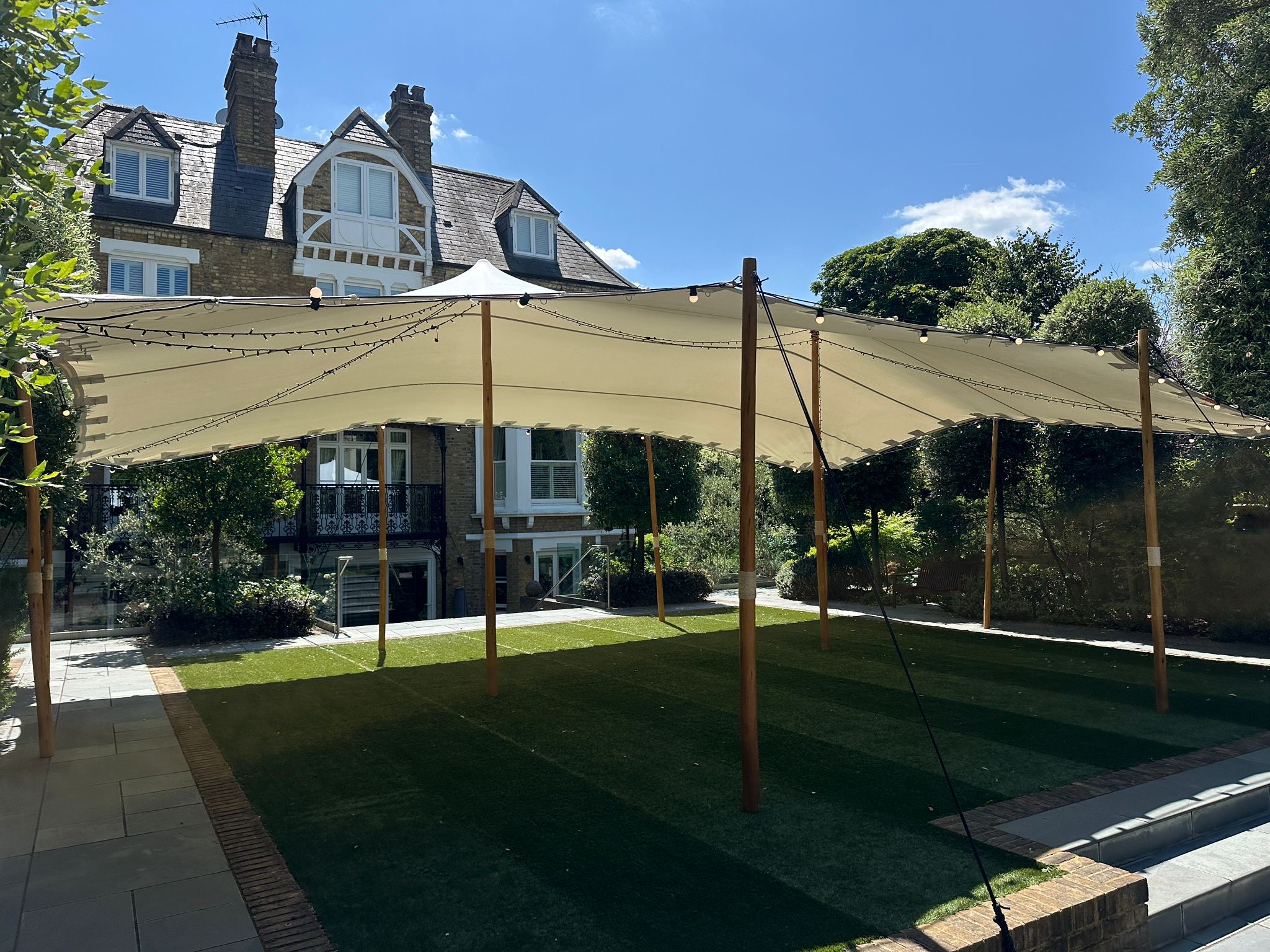
A stretch tent is a flexible fabric canopy supported by poles and held under tension with ropes and suitable anchoring points. The position and height of the poles give it its distinctive curved shape, creating a covered space that can remain open to the surroundings.
Used for weddings, garden parties, festivals and corporate events, stretch tents provide shelter while keeping the setting part of the occasion. A garden, courtyard or country house can still be seen and enjoyed from beneath the canopy, rather than becoming a backdrop outside an enclosed room.
If you are considering hiring one, it helps to understand how the structure works and what affects the space available underneath.
How does a stretch tent work?
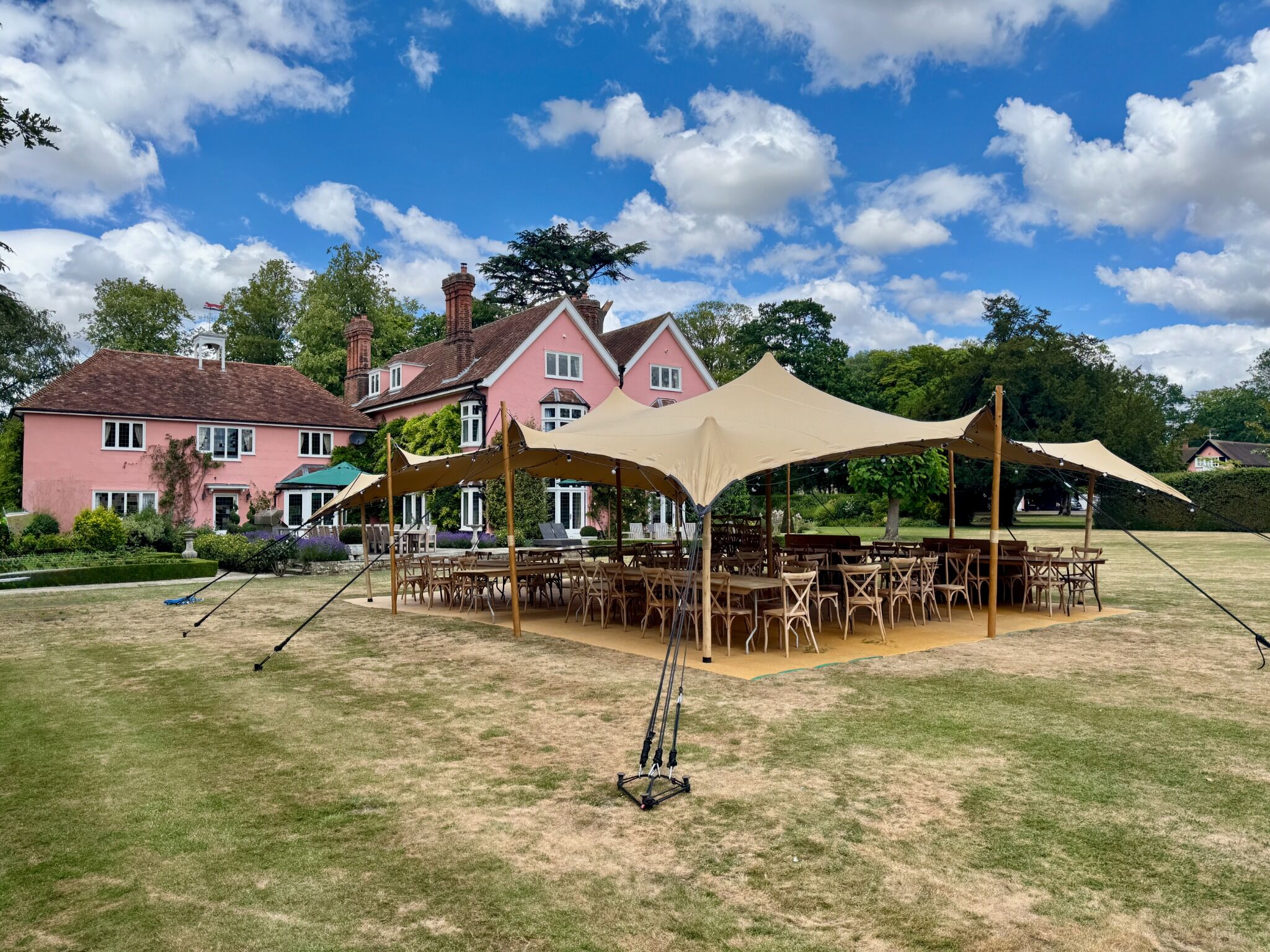
A stretch tent gets its shape and stability from the relationship between the fabric, supporting poles and anchoring system. Taller internal poles create peaks in the canopy, while poles and tensioning points around the perimeter establish its edges and openings.
The arrangement is planned around the tent, the site and the event. An open side might face a garden or a view, while a lower edge can provide more shelter on an exposed side. These decisions also affect entrances, headroom and where furniture can sit.
Although the fabric allows flexibility, a stretch tent cannot simply be pulled into any shape. Each installation needs an appropriate configuration and anchoring arrangement for the structure and site conditions.
What is the space like underneath?
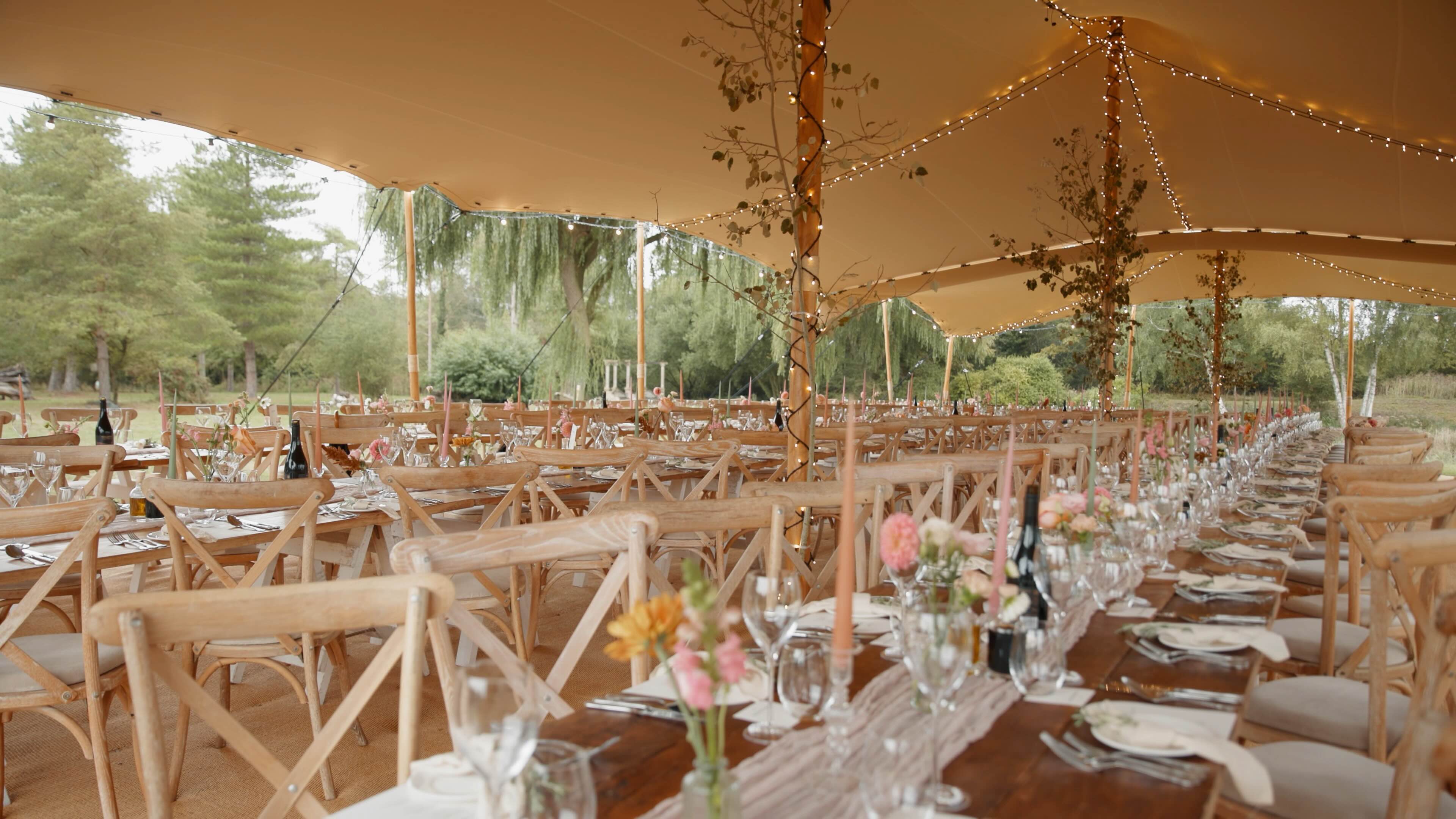
The sloping canopy and internal poles give a stretch tent a different feel from a conventional room. With the sides open, guests can move between the covered area and the garden, making it well suited to events that use both spaces throughout the day.
The canvas and wooden poles provide a simple backdrop for different styles of event. They work with trestle tables and informal seating, as well as more elaborate wedding dining arrangements.
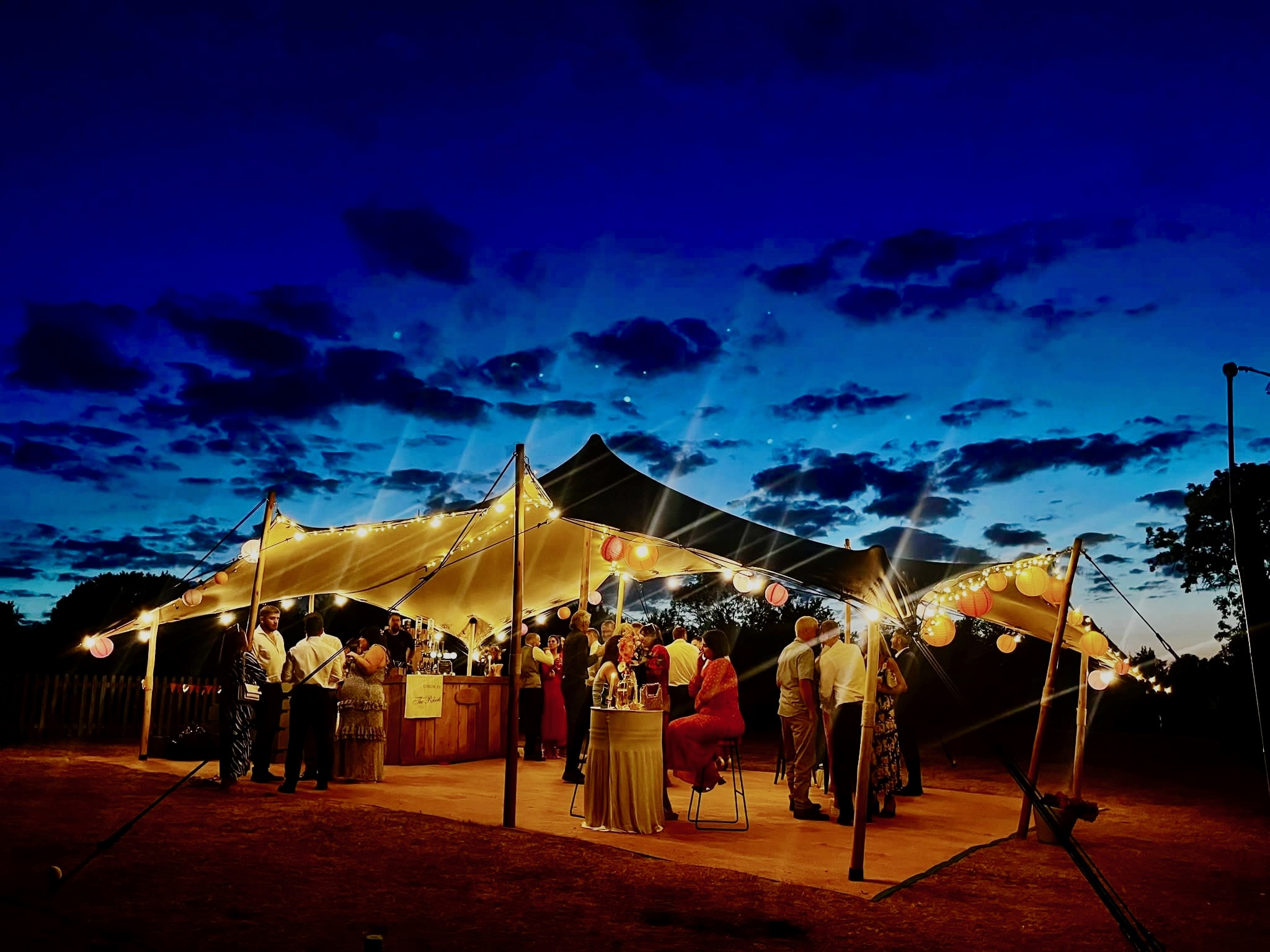
Matting, furniture and lighting make a considerable difference to the finished space. Festoon lights can illuminate the main areas, while fairy lights around the poles and uplighting on the canopy create a softer setting for the evening.
It is helpful to think about those elements together, particularly if the tent needs to accommodate dining, a bar and dancing.
Where can a stretch tent be installed?
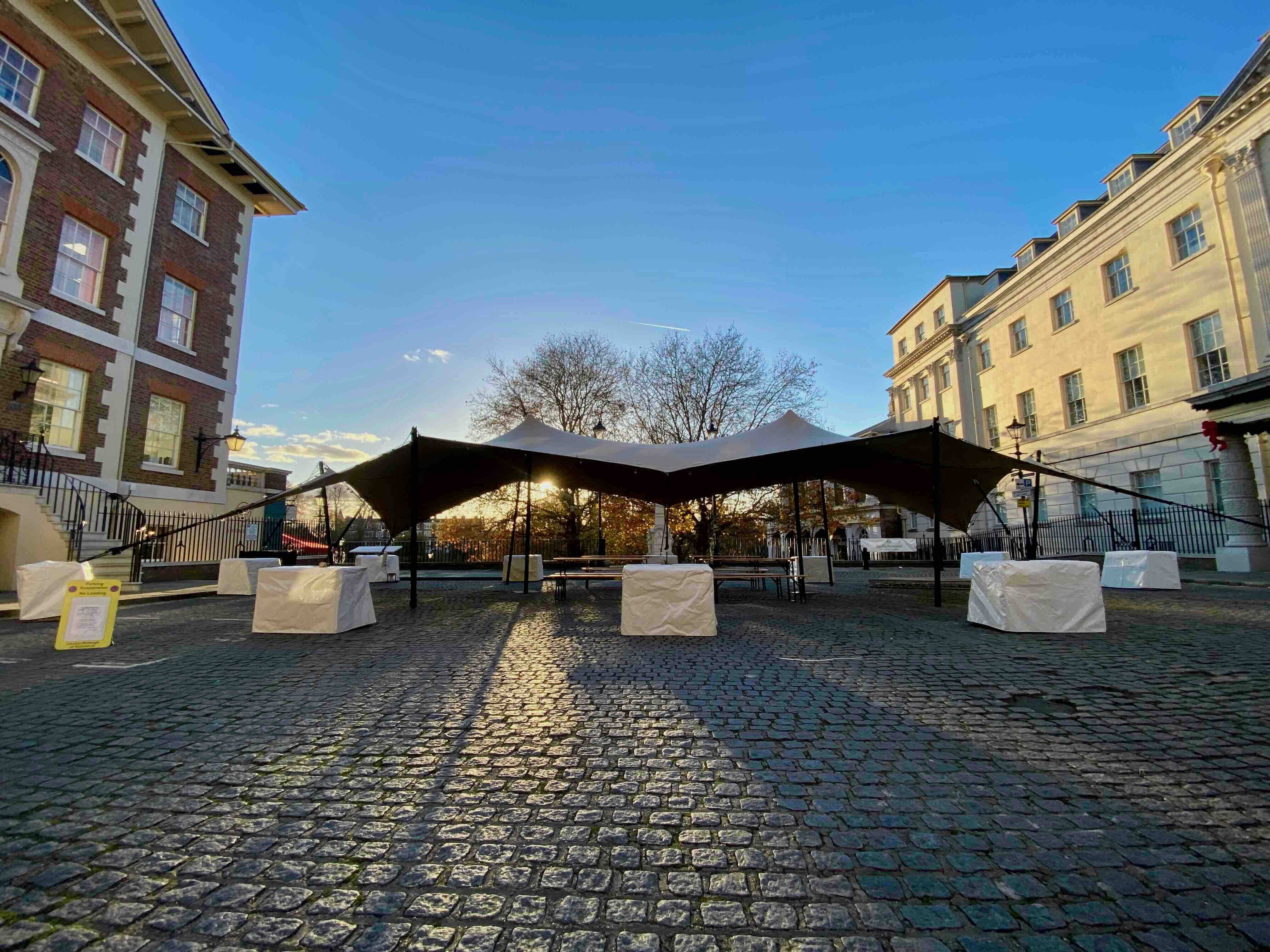
Stretch tents can work in gardens, fields, courtyards and venue grounds. Their flexible form can help accommodate some unusual spaces, although suitability depends on more than whether the canopy dimensions fit.
The installation also needs room for anchoring, safe access and the intended layout. Trees, buildings, underground services and changes in ground level can all influence what is possible.
On suitable ground, stakes may provide the anchoring. On hard surfaces, an installation may require appropriately assessed structural fixing points or a designed ballast arrangement. Nearby walls and railings cannot be assumed to be suitable attachment points.
For a closer look at these considerations, read Will a Stretch Tent Fit in Your Garden or Venue?
What protection does it offer from the weather?
A waterproof canopy provides overhead cover from rain, but the protection around the edges depends on the configuration. An open-sided tent remains exposed to wind and rain blowing in from the sides, so the location and likely conditions need to be considered during planning.
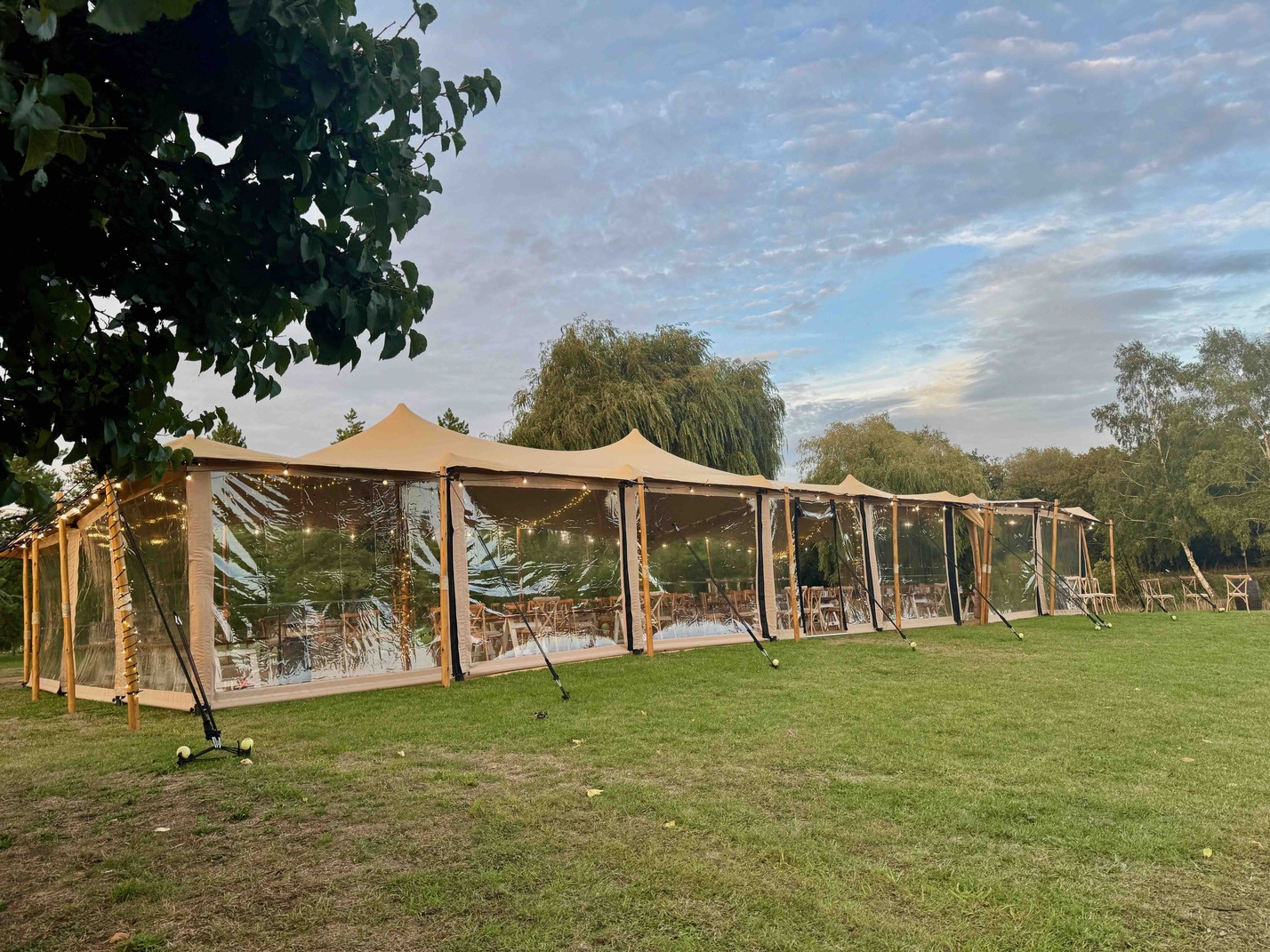
Transparent side panels can provide additional weather protection while preserving views out of the tent. Other side arrangements may be appropriate for particular installations, but the canopy configuration and sides should be agreed before the build.
For cooler events, suitable heating can also form part of the plan. The aim is to choose a setup that suits the season and location, with a clear understanding of its limitations.
Our guide to stretch tents in rain, wind and cold explains this in more detail.
How do you choose the right size?
Guest numbers are a starting point, but what those guests will be doing matters just as much. A standing drinks reception needs a different layout from a seated wedding breakfast, particularly when a dance floor, DJ, bar or stage also needs to fit beneath the canopy.
Internal poles and lower canopy edges need to be allowed for when planning tables and circulation space. The overall dimensions alone do not tell you how many people can sit comfortably in a particular arrangement.
Before choosing a size, establish what needs to be covered and which activities will happen at the same time. If dining is followed by dancing, for example, decide whether the dance floor will have its own space or whether furniture will need to be moved.
How much does stretch tent hire cost?
The cost depends on the tent size, location, installation requirements and any additional equipment, such as matting, lighting and furniture. When comparing quotes, check whether installation, dismantling and transport are included.
Our stretch tent hire cost guide explains what goes into a quote and how to budget for your event.
If you are considering a stretch tent for your event, get in touch with your date, location and approximate guest numbers. A few photographs of the space are helpful too, so we can discuss a suitable size and layout.